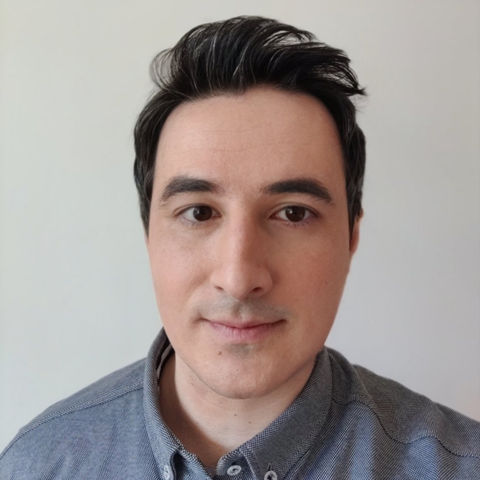
Short and concise
Founding member of Gamerlicious and deputy cashier.
Personal

Born 1989 and raised in Villach, Austria, with a short detour/stay in the US. There I also came first in contact with computer games. To be more precise, it was actual a Serious Game from the educational area by DSI/Disney Interactive called “Mickey’s 123: The Big Surprise Party”. I got the game from my parents as a present when I was a three year old boy and it suffices to say it made a mark and influenced me regarding my future endeavors. But at this point in time, let’s stick to the timeline. I will get to it later on.
Anyhow, this game and the Lemmings lead to me being able to execute my first DOS commands by the age of four. At least I was able to run my games indepentely as well as to start and shutdown the family computer. In addition, over time I became more and more generally interested in computers. In the end, the whole thing culminated in my childhood/adolescence when I was regularly “inheriting” my father’s old hardware from the age of six. So when he bought new parts (both for work and of course for gaming), I was allowed to continue using his old, but mostly still good hardware for experiments and for playing games. Thanks for that!
Education and career
At this point cynical people may claim that someone who starts so early will be “spoiled” for the rest of their lives. In my case, there might be a tad of truth to it.
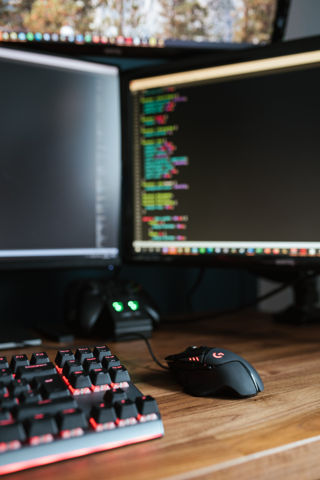
I couldn’t let go of my enthusiasm for these sometimes almost magical computing machines and I wanted to know more about how they work. For this reason I did my high school diploma including related professional training as a software developer at the HTL Villach. Since I really wanted to know how things work, I as well added a bachelor’s degree in computer science from the University of Applied Sciences Technikum Wien. That’s why I ended up in Vienna and I’ve stayed here for at least the last ~10 years.
Since I was particularly interested in computer games and the learning game from my childhood inspired me to learn to count and to do math, I finally added the Master’s degree in “Game Engineering and Simulation”. My master’s thesis was in the serious games area, specifically in game accessibility.
With these kind of topics there is always a danger that I will go beyond the scope of things especially if I go into too much detail. That’s why at this point I’ll just briefly mention that I’m currently with a leading logistics company as a software engineering expert in the area of governance.
Hobbies
Since my text is probably two notches “too techie” for ordinary people anyway, I won’t mention my hobby-Kubernetes-cluster with my spare time programming projects and other technical toy stuff and confine myself to my second favorite spare time topic: Travel.

Especially to the south, where it’s warmer, to explore other countries as well as to meet new cultures and just cool people. One of my main goals would be to make enough contacts to be able to couch-surf half of the planet, at least theoretically. I’m not quite through with it yet, BUT I’m working on it!
Any questions?
Talk to me either personally at the next Gamerlicious event or simply via Discord. If I’ve had a good breakfast, I might not even bite!
Well, a little at most. (: