
Is there a perfect answer to replace discord?
Discord-Alternatives for Gaming-Communities
It’s hard to imagine online gaming communities without Discord. Over the last decade, the platform has become the de facto home for everything from small friend groups to massive communities. Voice chat, text channels, roles, events, and an incredibly low barrier to entry have made Discord the obvious choice for millions of users.
However, not everyone wants their community to depend entirely on Discord. Privacy concerns, platform control, lack of autonomy, or simply the fear that the rules could change at any time have led us-as well as many other communities—to search for alternatives.
A clear pattern quickly emerges: if you’re looking for a Discord alternative without the need to host your own infrastructure, there are only a few convincing options. If you’re willing to self-host or do a bit of tinkering, you gain significantly more choices—but you’ll also have to accept different compromises.
Feature Parity
When comparing Discord alternatives, people usually look at features Discord already offers: voice chat, roles, mobile apps, or screen sharing. And there’s a reason why Discord is the platform that has revolutionized online communities over the last decade.
Longevity
For communities that are meant to last for years, Discord’s unpopular changes have made one thing clear: long-term availability and control over your own infrastructure are things we need to think about.
A platform may look like the perfect Discord clone today and still disappear in a few months.
All of these factors often determine whether a community can survive in the long run, regardless of which features are available today.
Below (in no particular order) are some Discord alternatives I took a closer look at.
Mumble: The Best Choice for Reliable Voice Chat
If voice communication is your main priority, Mumble remains one of the safest choices available.
Mumble is open source, fully self-hostable, and has been an established part of the gaming scene for many years. The software is still actively maintained and has an impressively long history.
Key points:
- Fully self-hostable
- Open source
- Proven and stable technology
- Extremely low latency
- Independent of a central provider
- Focused on voice rather than community management
- Very few modern social features
- Not a true Discord replacement for text-based communities
If you’re simply looking for a voice infrastructure that will probably still work ten years from now, it’s hard to go wrong with Mumble.
TeamSpeak: The Old Reliable
For many older gamers, TeamSpeak was the standard before Discord.
Even today, TeamSpeak offers a robust voice platform with its own server infrastructure and a strong focus on gaming communities.
Key points:
- Mature voice technology
- Self-hosted servers are possible
- Well known within gaming communities
- More than two decades of history
- Proprietary software
- Fewer modern community features
- Dependence on the vendor for clients and licensing
TeamSpeak has existed for over twenty years, making it one of the safest choices for communities that value stability over innovation.
Stoat (Formerly Revolt): The Closest Thing to Discord
Anyone looking for an open-source solution that feels as close to Discord as possible will almost inevitably end up looking at Stoat, the successor to the Revolt project.
The platform aims to provide many of Discord’s features in an open and self-hostable environment.
Key points:
- Open source
- Self-hostable
- Discord-like user experience
- Fast-paced development
- Still relatively young compared to the alternatives
- Smaller ecosystem
- Long-term viability has not yet been fully proven
For administrators willing to host their own infrastructure and occasionally get their hands dirty, Stoat is currently the alternative that feels the most like Discord.
Matrix: Maximum Control, Maximum Complexity
Matrix is not a single application but an open communication protocol. Clients such as Element provide text, voice, and video communication similar to modern messaging and community platforms.
The biggest difference is that there is no central provider. Communities can run their own servers while still communicating with other Matrix servers.
Key points:
- No dependence on a central platform
- Open source
- Self-hostable
- Highly flexible
- Federated network (optional)
- Higher technical complexity
- Not primarily designed for gaming
- Voice and community features are not as polished as Discord’s
Matrix is a great option for communities seeking independence and maximum control. However, the barrier to entry is considerably higher than with traditional gaming voice solutions.
Just because every Discord feature can theoretically be recreated doesn’t mean it actually has been. While the protocol is open, only a few projects have managed to turn it into a truly polished user experience.
Steam Chat: Easy to Use, Hard to Customize
Valve already provides many of the features small communities need through Steam Chat: groups, voice channels, invitation links, and direct integration with the existing Steam user base.
Key points:
- No additional registration required for Steam users
- Excellent integration into the gaming ecosystem
- Stable provider
- Limited community features
- Complete dependence on Valve
Steam itself is unlikely to disappear anytime soon, but communities remain fully dependent on Valve’s decisions.
IRC: The Surprisingly Modern Alternative
Many people associate IRC with terminal windows, cryptic commands, and software from the early days of the internet. In reality, the ecosystem has evolved significantly over the past few years.
With modern frontends such as KiwiIRC or The Lounge, IRC can now be used comfortably through a browser. Mobile devices are supported, connections can remain persistent, and the interfaces look far more modern than many people expect.
Particularly interesting is the fact that KiwiIRC offers a conferencing plugin that integrates Jitsi Meet directly into IRC channels. This makes audio and video conferences possible without switching to a separate platform like Discord. Users can remain in their IRC spaces while also participating in voice or video chats.
Key points:
- Extremely durable and open protocol
- No dependence on a single provider
- Modern browser frontends available
- Very low infrastructure costs
- Higher technical barrier to entry than Discord
- Community features often need to be combined from different tools
IRC is probably the most underestimated option in this comparison. While many modern Discord clones still have to prove that they will exist in five years, IRC has already survived for several decades.
So, Is There a True Discord Replacement?
There are still platforms that Discord has not managed to push out of the market:
- TeamSpeak
- Matrix (when not self-hosted)
- Steam Chat
However, moving an established community away from Discord—and potentially fragmenting it—is a step that we, like many other community leaders, have to weigh very carefully.
Not only feature parity but also migration effort and the reaction of users who say, “This doesn’t look like what I know,” are major reasons why staying on Discord currently feels easier.
The search for a Discord alternative often leads to a sobering conclusion:
If all you want is “Discord, but without Discord,” there is currently no solution that meets every requirement at the same time.
Anyone who doesn’t want to run their own server or deal with technical administration will usually end up on proprietary platforms and accept dependencies similar to those of Discord.
Self-Hosted Alternatives
If you’re willing to host your own infrastructure and invest some time in administration, there are several interesting options:
- Stoat
- Mumble
- Matrix (self-hosted)
- IRC + Jitsi
For communities in general, Matrix—more specifically a server/client combination such as Synapse and Element X—is undoubtedly one of the most interesting alternatives to Discord. The platform combines openness, federation, and independence from individual providers in a way that very few other solutions can match.
That freedom comes at a cost. Matrix is also one of the most complex solutions in this comparison. Setting it up, operating it, and maintaining it require considerably more technical expertise than Discord or many of its alternatives.
If you’re simply looking for an easy Discord replacement, Matrix is probably not for you.
However, if you’re willing to invest time in building your own community infrastructure, Matrix provides a modern and secure platform. For communities that value openness and digital sovereignty, that is a compelling argument.
Even so, I wouldn’t describe Matrix as the ideal solution for every gaming community. Its technical complexity, occasionally rough user experience compared to Discord, and higher administrative burden make it a strong option—but not necessarily the most obvious choice.
Surprisingly, I would highlight a different candidate as the most interesting long-term solution: IRC.
While Matrix still has to prove that it can remain just as relevant decades from now, IRC has already done exactly that. The protocol has existed since the late 1980s and has outlived multiple generations of communication platforms. It belongs to no company, requires no investors, and does not depend on any centralized service.
With modern frontends such as KiwiIRC or The Lounge and the ability to integrate Jitsi Meet for voice and video conferencing, IRC is also far more comfortable and user-friendly today than its reputation would suggest.
That is precisely why IRC is, to me, perhaps the most understated yet most fascinating candidate in this comparison.
Final Thoughts
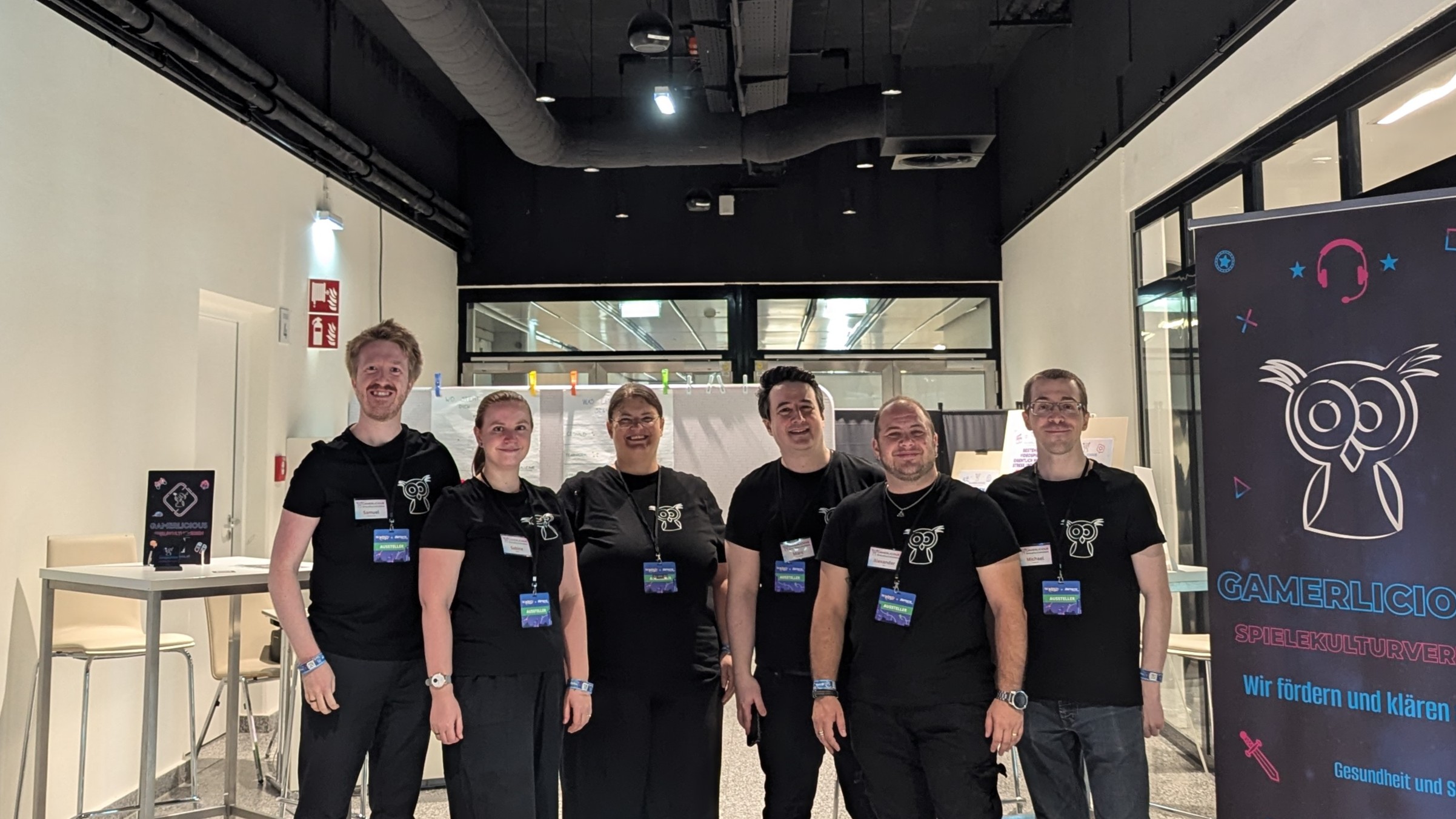
This research focuses on alternatives that come close to Discord in both functionality and user experience. It is based on discussions about which community communication platforms could be interesting for Gamerlicious.
You can still find us at https://glicio.us/discord and that’s probably the most telling conclusion of all.
This overview was last updated in June 2026. The market continues to evolve, new projects appear, and existing platforms can change direction quickly. Consider this article a starting point for your own research rather than a definitive answer.
Further Reading
Topics


PEGI - USK - What do these ratings mean?
February 1, 2026

When Games Play Unfair - How "Dark Patterns" Trick Us
November 5, 2025
Blog Posts


General Assembly 2025 – Review, Elections & Outlook
March 5, 2025

That was our 2024 - a little review
December 9, 2024